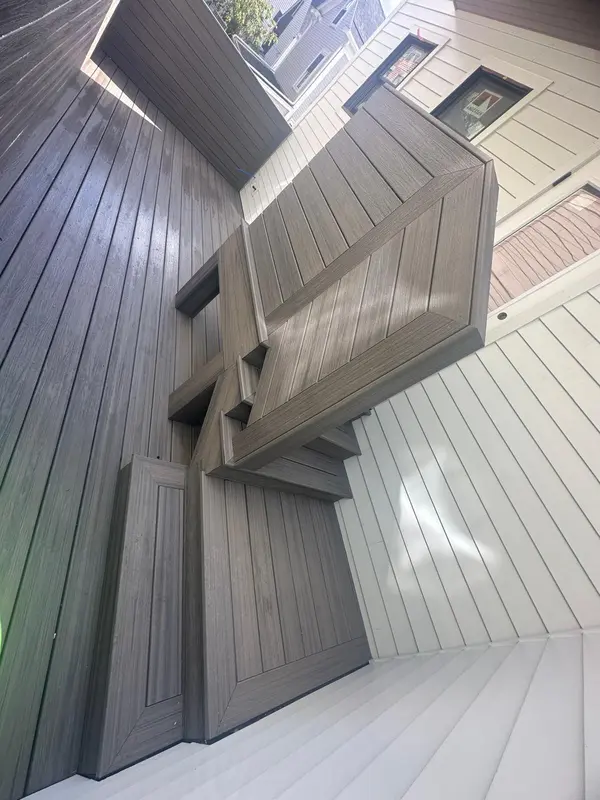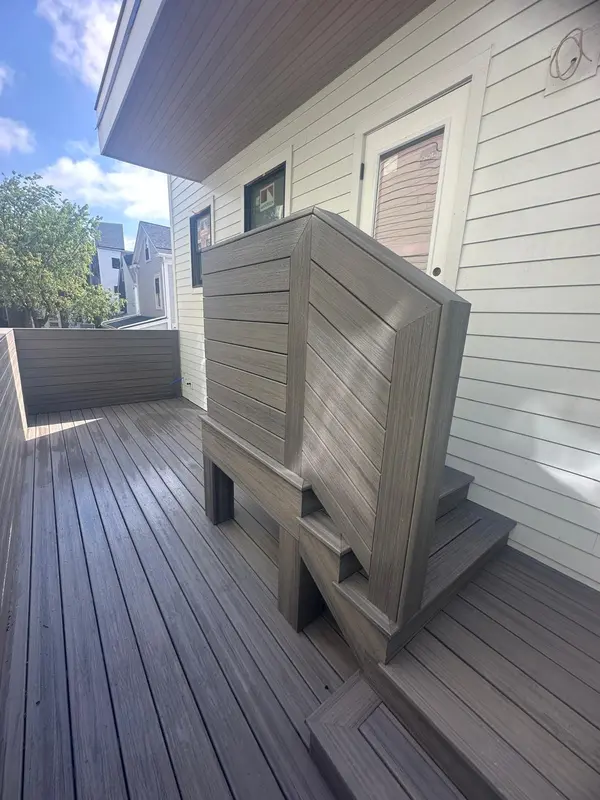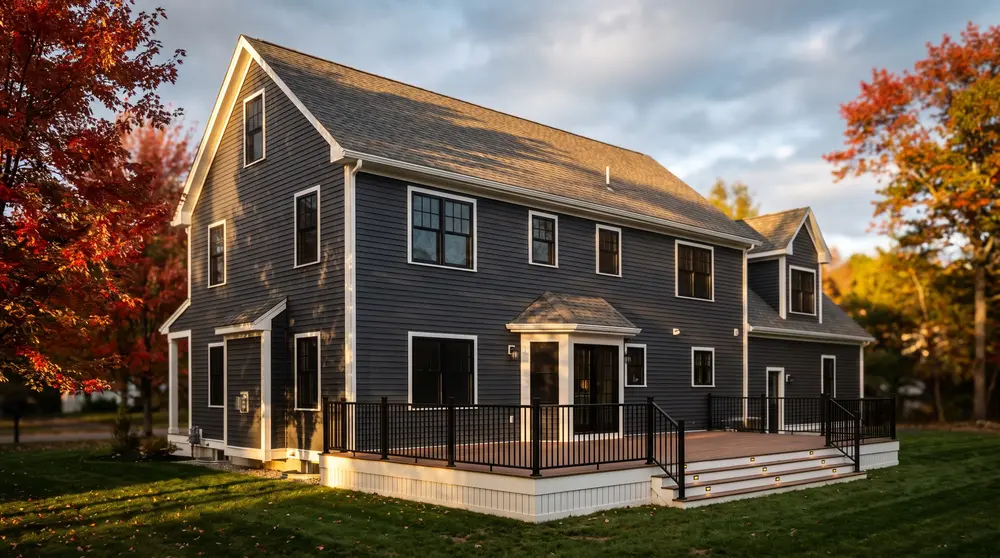


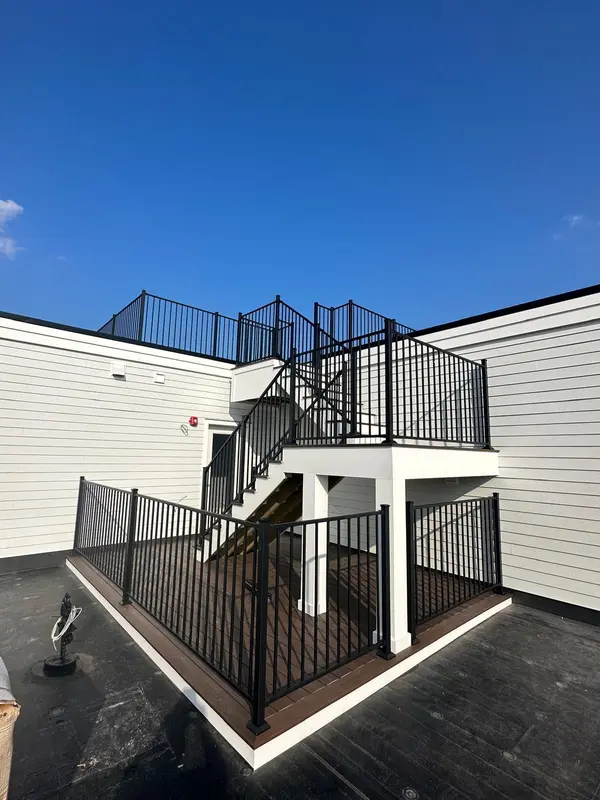
Stairs and railings are the parts of your deck people actually grab. They're also the first parts to fail. Stringers sit close to the ground and soak up water. Railing posts get leaned on, pushed and bumped by snow shovels until the fasteners loosen. A railing that moves an inch under your hand is telling you something about the wood at its base.
You don't always need a whole new deck to fix it. If your frame and boards are in good shape, we can rebuild just the stairs and railings. New stringers, new treads, a solid landing at the bottom, and posts fastened so they don't rock. We match pressure-treated wood to wood decks and composite to composite ones.
If we pull a post and find rot running into the rim board or joists, you'll see it in photos before we go further. Sometimes a stair rebuild turns into a partial frame repair. We won't hang a new railing on a rotted rim board. Your written estimate spells out what we found and what it covers.
What's included
- Removal of old stairs, stringers and railings
- New stringers laid out with even rise and run
- Treads in pressure-treated wood or composite
- Solid landing at the base of your stairs
- Railing posts fastened through the frame, not just toe-nailed
- Handrail along the stairs
- Railing style matched to your existing deck
- Check of rim board and joists where posts attach
Signs it's time
- Your railing moves when you lean on it
- Treads are cracked, soft or sloping toward one side
- The bottom step has sunk or pulled away from the stringers
- Your stairs have uneven step heights that catch your toes
- You can see gaps where railing posts meet the deck frame
Why stairs fail first, and how we build yours
The bottom of a stair run takes the worst of it. Snow piles there, meltwater pools there, and the stringers sit inches off wet ground. We set your stairs on a proper landing so the stringers aren't wicking up water from the soil, and we cut every stringer to the same layout so each step matches the last.
Railing strength comes from how the posts attach. A post that's just nailed to the outside of a rim board will loosen. We fasten posts through the frame so they hold when someone leans their full weight on the rail. On the East Otis deck, the stairs and railing went in as part of the new frame, which is the strongest way to do it.
What happens behind your deck stairs and railings
You won't see most of this once the job is done. That's why we photograph it before we cover it.
- Substrate inspected and photographed before it's covered
- Every opening flashed so water gets directed back out
- Seams and laps of the weather barrier taped and sealed
- Fastening and clearances per the manufacturer's manual
- Soffit ventilation kept open, corners and returns sealed
- Site cleared and magnet swept at the end of every day