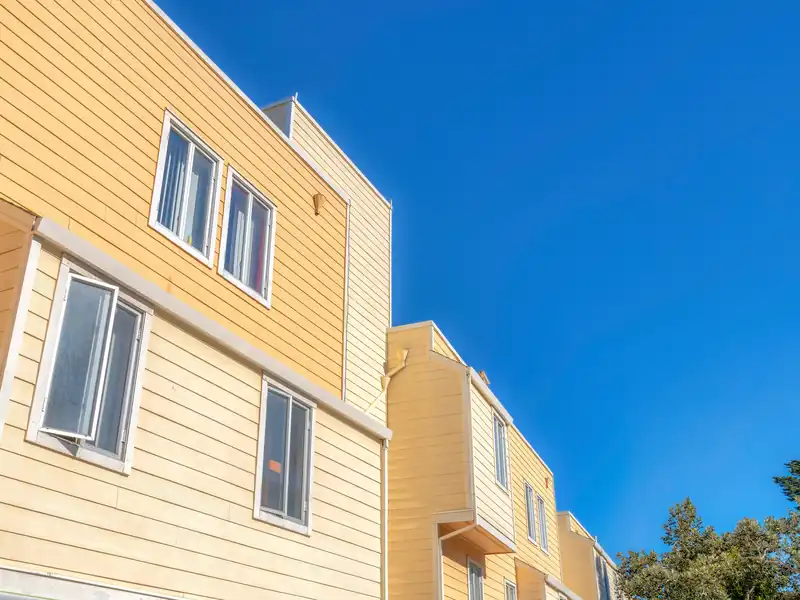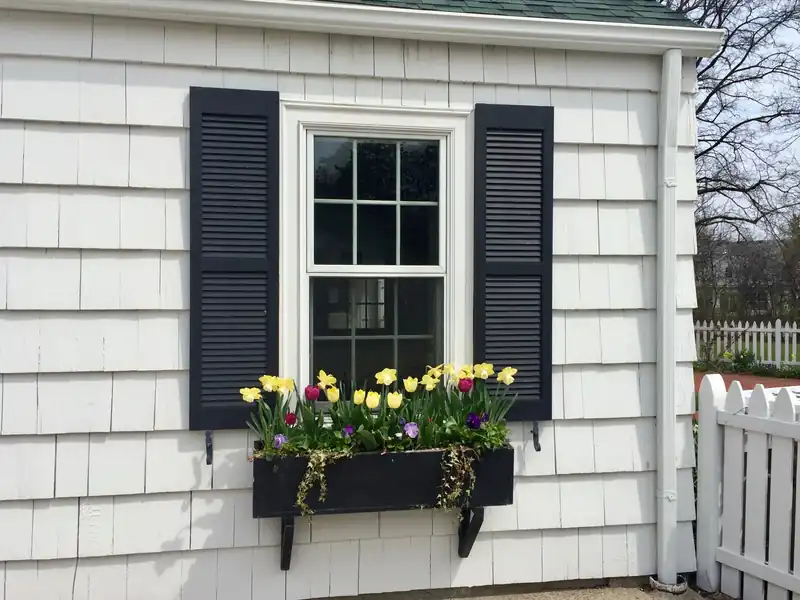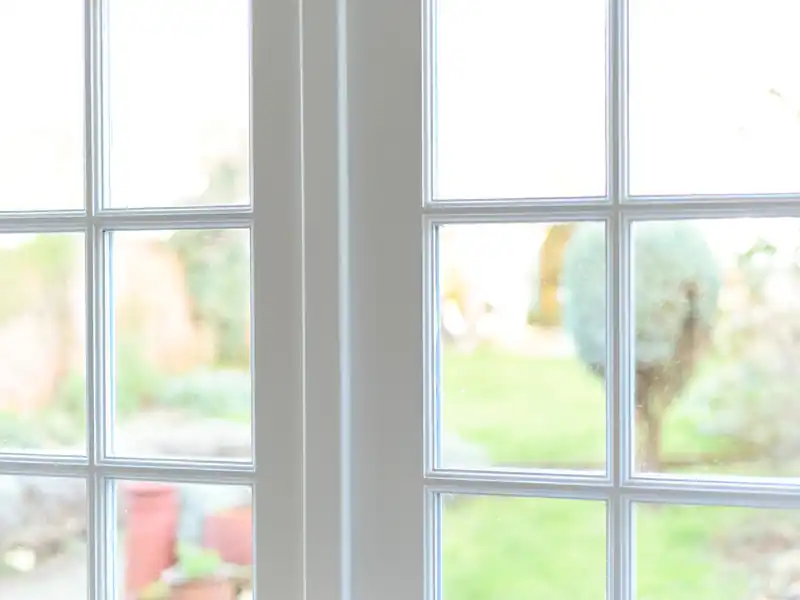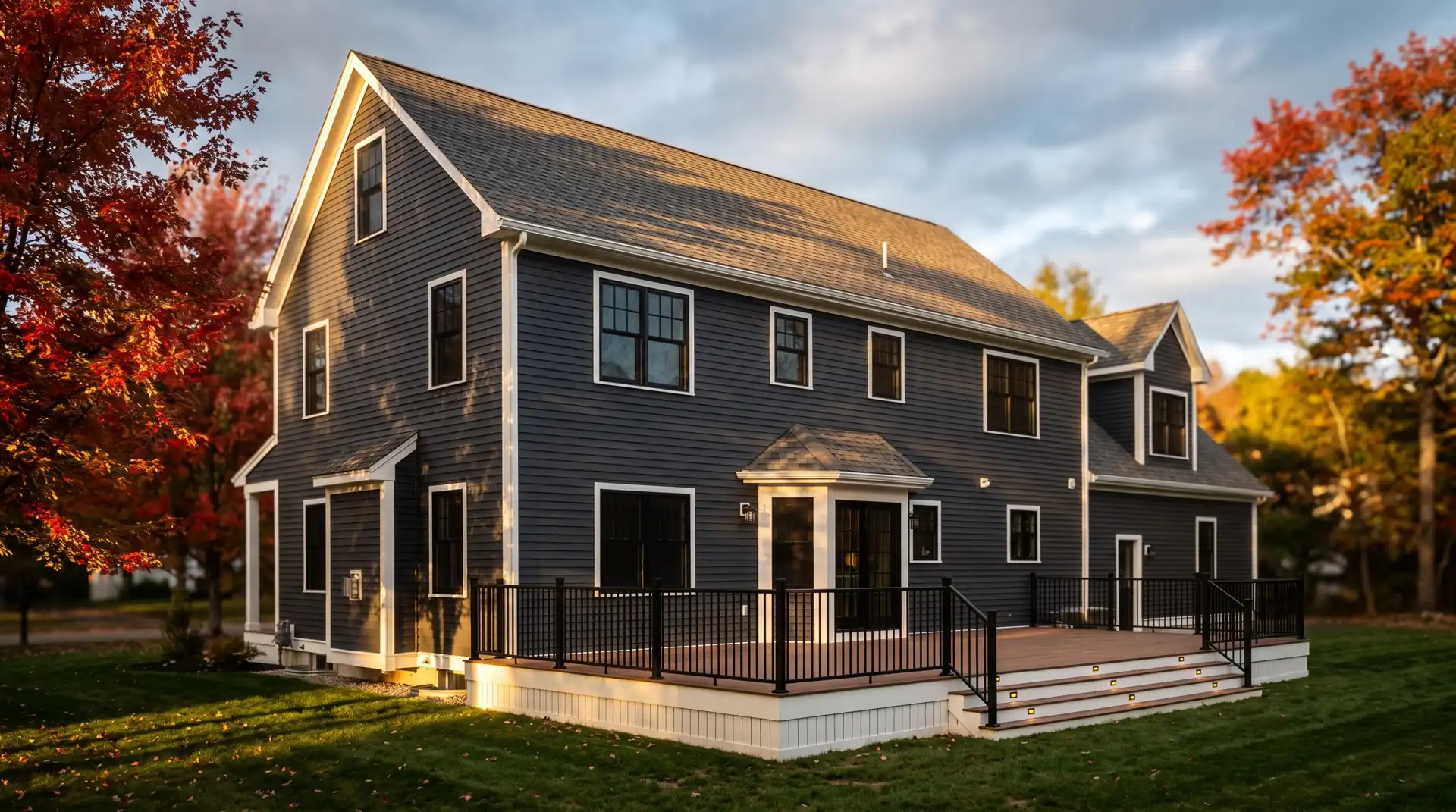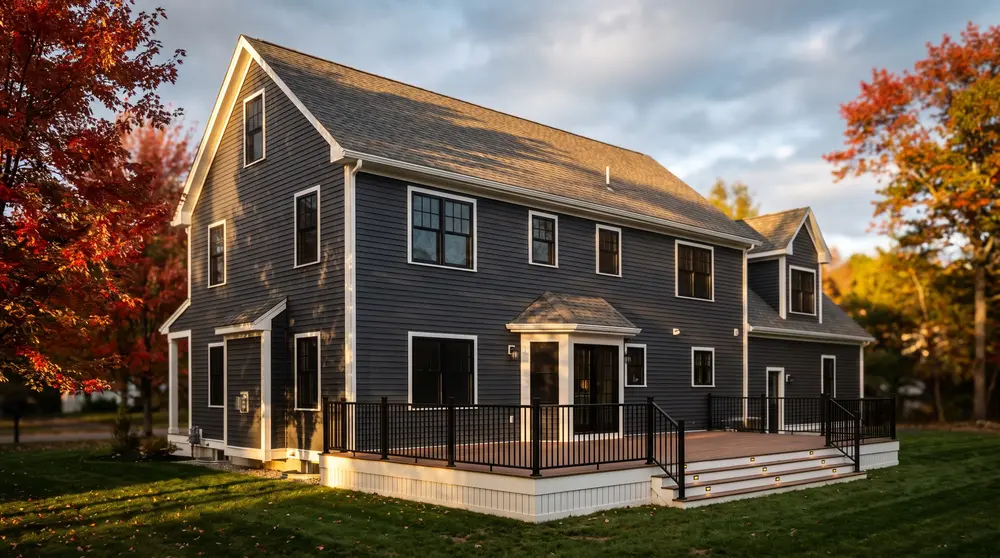

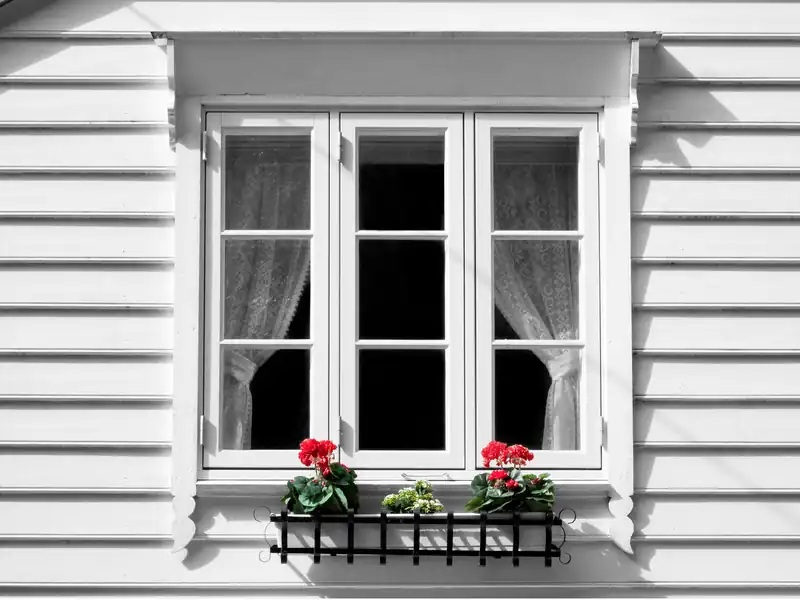
Walk down any street in Worcester, Auburn or Shrewsbury and most of the windows you see are double-hung. Both the top and bottom sashes slide in the frame, so you can open the bottom for a breeze or drop the top to let warm air out near the ceiling. They match the look of Capes, colonials and triple-deckers, which is why they stay the most common choice for replacement work across Central MA. They also suit the narrow, tall openings that older New England framing was built around.
The trouble is that older double-hungs wear out in predictable ways. Sash cords snap and weights rattle inside the walls. Wood sashes swell in August and shrink in January, so they either stick or let wind whistle through. Single-pane glass fogs and frosts on the inside. If your windows are painted shut or held open with a stick, you already know the feeling. Old storm windows bolted over the outside add another layer of glass to clean and another set of gaps for water to sit in. Replacing the whole unit fixes all of it at once.
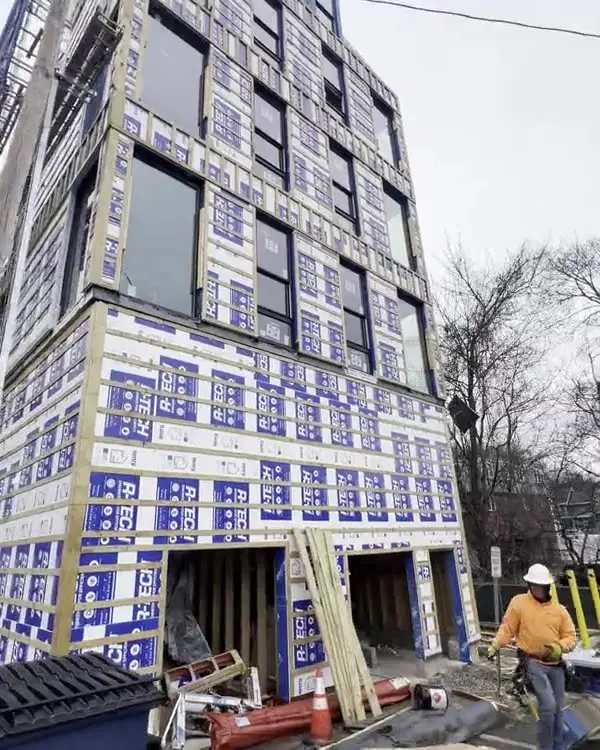
When we replace your double-hungs, we pull the old unit, look at the rough opening, and photograph any rot before it gets covered. Then we set a sill pan, flash the opening, tie it into the house wrap and set the new window square, level and shimmed per the manufacturer instructions. The exterior trim gets white aluminum wrap, so you're done painting casings. Inside, you get sashes that lift with one hand and lock with a flip of the latch. We clean up every day and haul the old units away when the job is done.
What's included
- Removal of your old double-hung unit
- Inspection and photos of the rough opening
- Sill pan set at the bottom of the opening
- Flashing tape tied into the house wrap
- Window set square, shimmed and fastened
- Gap insulated with low-expansion foam
- Exterior trim wrapped in white aluminum
- Sealant at the trim and daily cleanup
Signs it's time
- Sashes won't stay up without a prop
- Sash cords are broken or weights rattle
- Frost forms on the inside of the glass
- Windows are painted shut and won't open
- Wind whistles through the meeting rail
How a double-hung window works
A double-hung window has two sashes that ride in tracks on each side of the frame. Balances hidden in the jambs hold each sash wherever you leave it, which replaced the old cords and weights. When both sashes are lowered and raised a little, cool air comes in at the bottom and warm air leaves at the top. That two-way airflow is hard to get from any other style of window. Single-hung windows look the same, but only the bottom sash moves.
Most modern double-hungs tilt in. You unlatch the sash, pull two small clips, and the sash swings into the room so you can wash the outside glass from inside. That matters on a second floor or a triple-decker where a ladder is a bad idea. For bedrooms, check egress size during the estimate, because the open area is only about half the full window. Tilting also makes it easy to wipe the tracks and check the weatherstripping each fall.
Glass and frame choices are where you tune comfort. Double pane glass with a low-E coating and argon fill is the common setup, and triple pane adds another layer for very cold rooms. Frames come in vinyl, fiberglass, wood or composite. Vinyl is low upkeep and fits most budgets. We go over each option at your free estimate and list it line by line. Popular lines include Andersen, Pella, Marvin, Harvey and Simonton. Tell us which one you want and we price and install that exact unit.
What happens behind your double-hung windows
You won't see most of this once the job is done. That's why we photograph it before we cover it.
- Substrate inspected and photographed before it's covered
- Every opening flashed so water gets directed back out
- Seams and laps of the weather barrier taped and sealed
- Fastening and clearances per the manufacturer's manual
- Soffit ventilation kept open, corners and returns sealed
- Site cleared and magnet swept at the end of every day