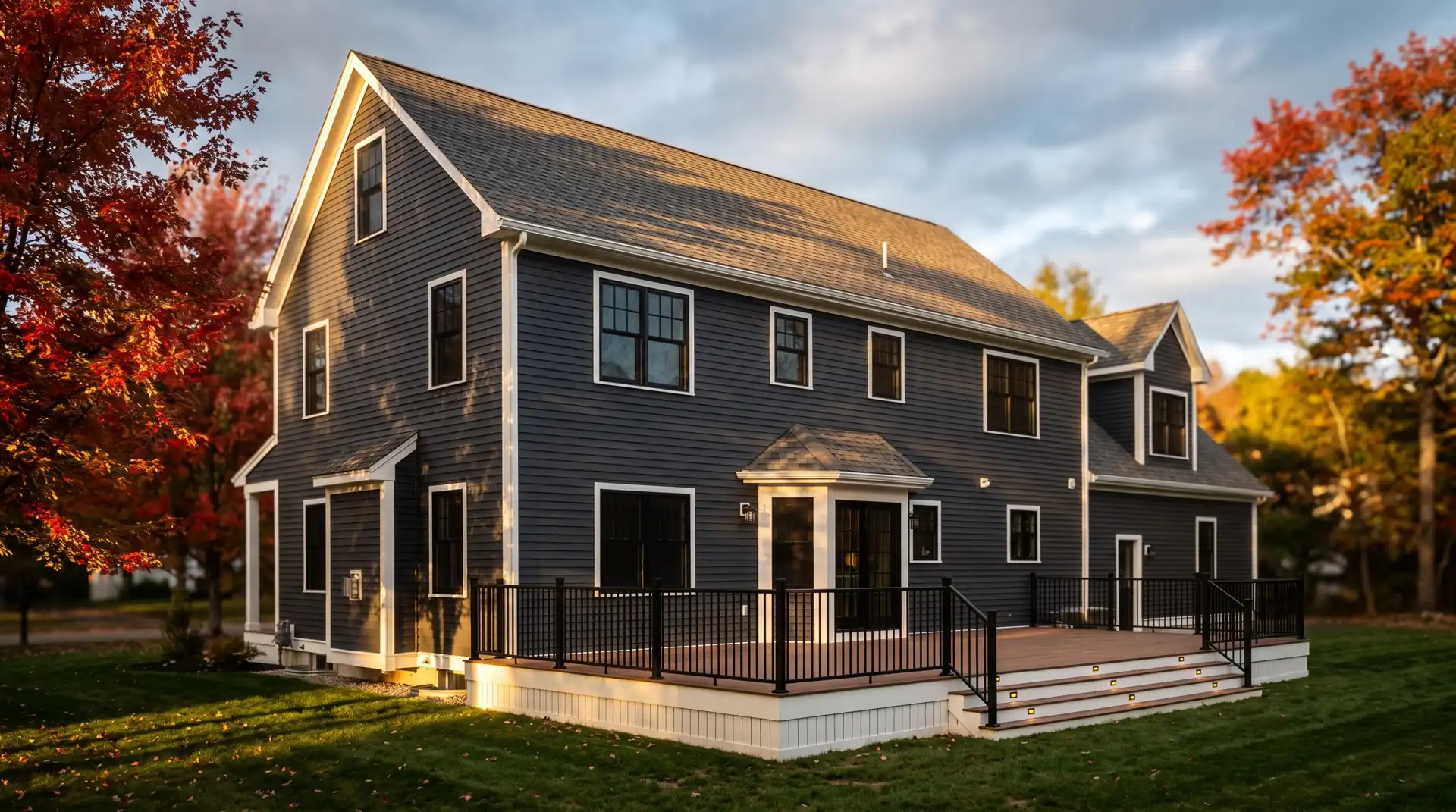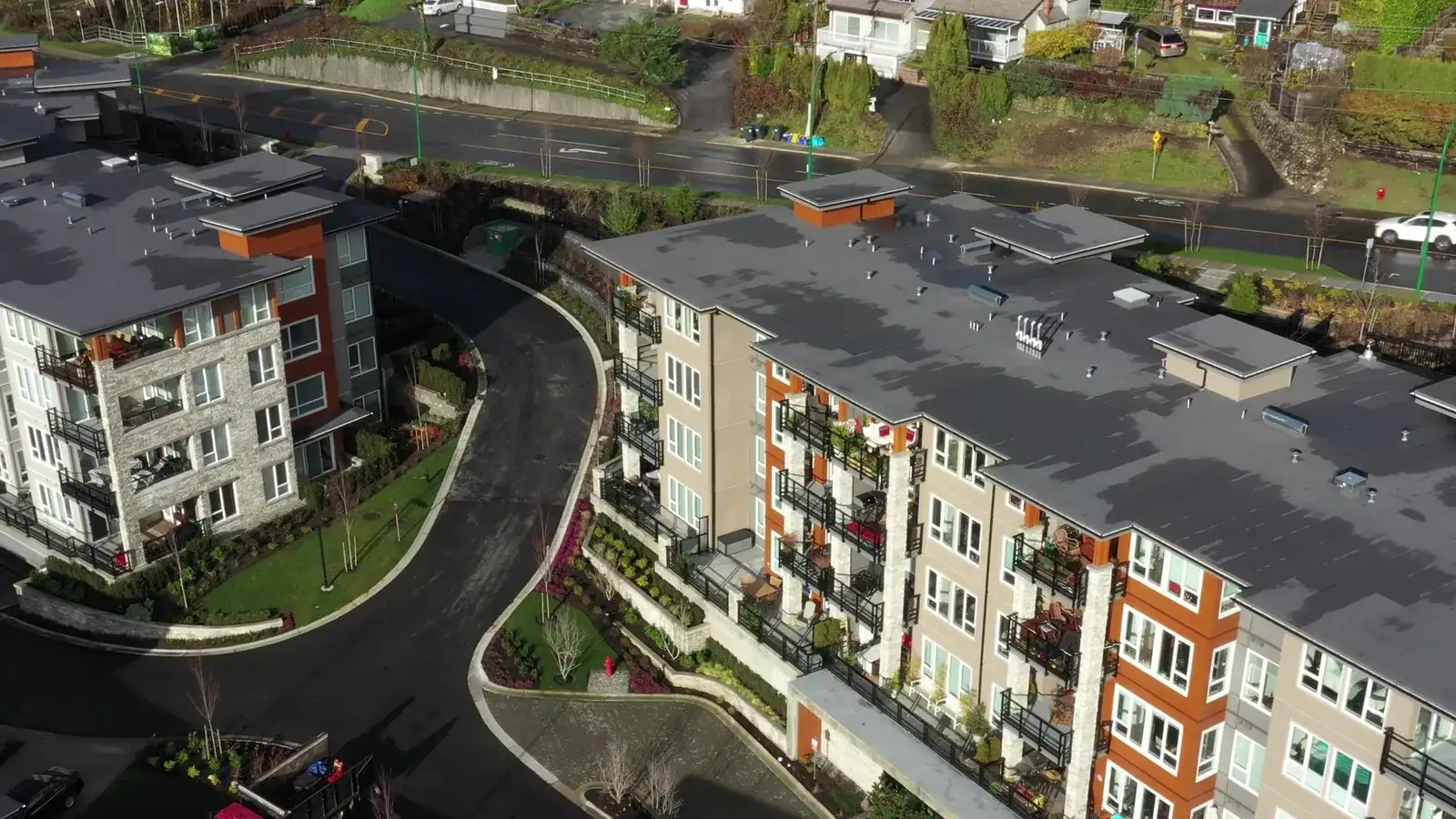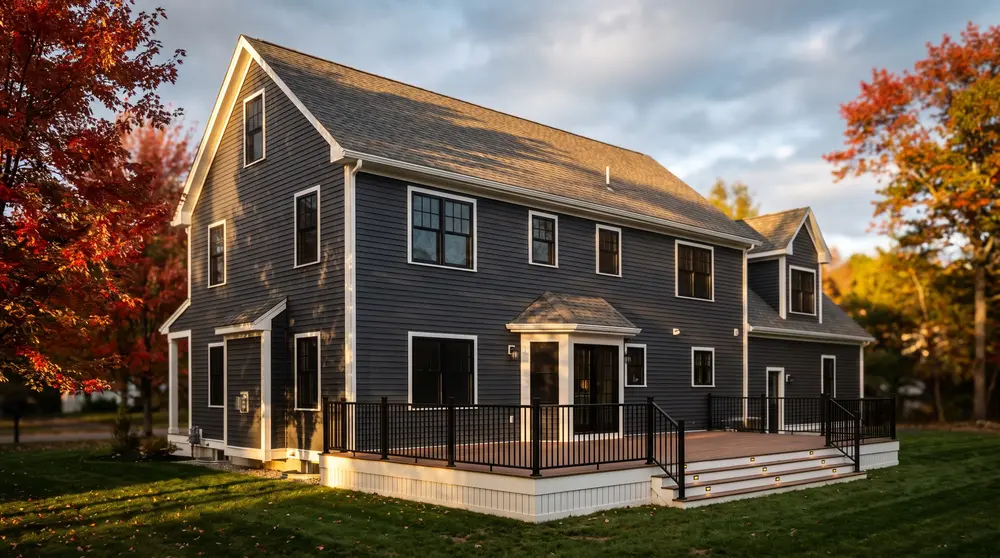

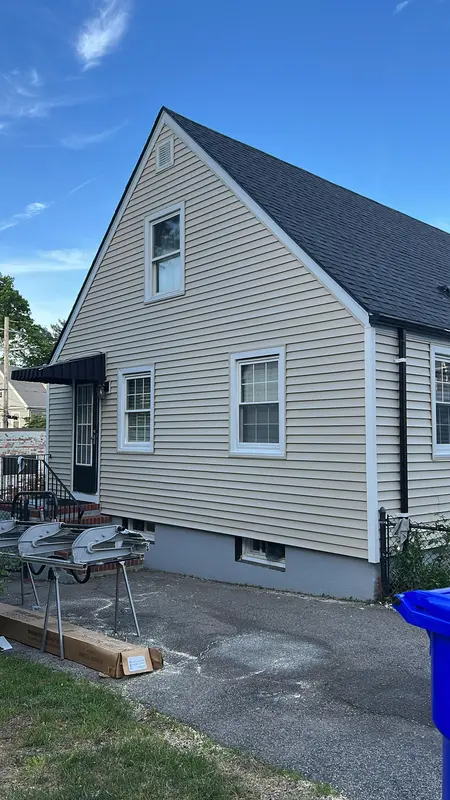
Westborough grew fast around its highways, so your street could hold a 1970s raised ranch next to a newer two-story colonial. Each one ages differently. The older homes tend to have tired wood clapboard or first-generation vinyl that's gone chalky. The newer ones often show builder-grade trim and gutters that were never sized right. We look at what you actually have before we write a single number down.
Winter here means ice building at the eaves, then thawing and refreezing for weeks. That water finds any gap at a window head or a roof-to-wall joint. You won't see the damage until sheathing goes soft. Wind-driven rain off open fields does the same thing to siding that was never backed by a real weather barrier. Most of what fails on a Westborough exterior traces back to water getting in where nobody flashed it.
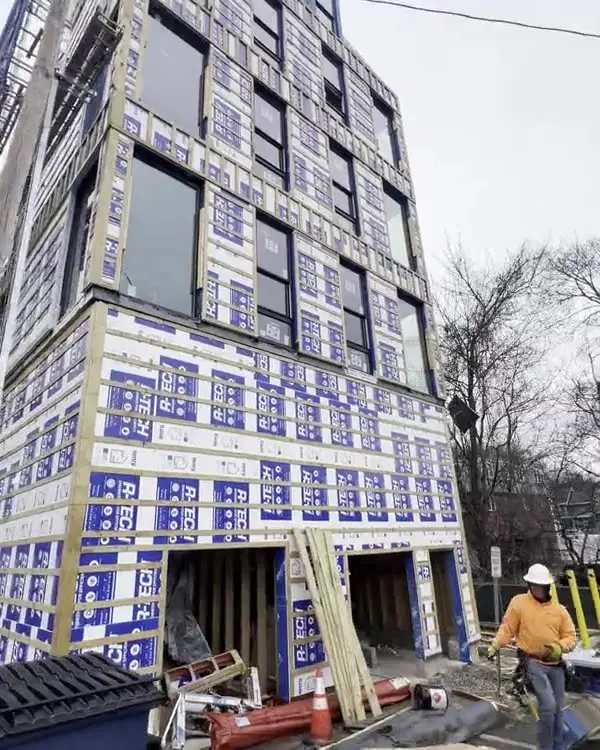
So we start underneath. We photograph your substrate before it's covered, wrap the walls in DuPont Tyvek HomeWrap, tape every seam, and flash each opening so water runs back out. Shingles go on in a high-wind nailing pattern. The drive from our Auburn shop is easy, and your site gets cleared and magnet swept at the end of every day.
What we see on Westborough houses
- Raised ranches and split-levels from the 1960s and 70s with original clapboard
- Newer colonials with builder-grade gutters that overflow at the corners
- Ice dams along low-pitch eaves after heavy snow
- Wind-driven rain hitting exposed gable walls