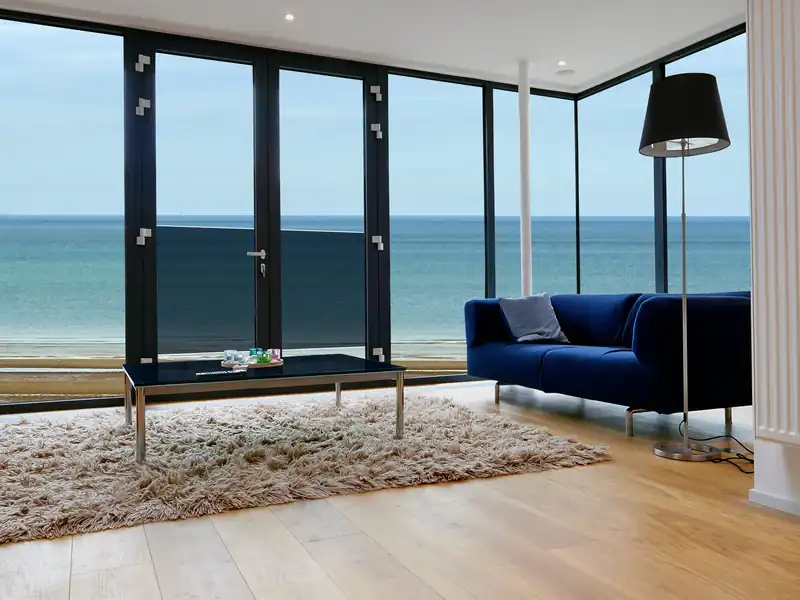


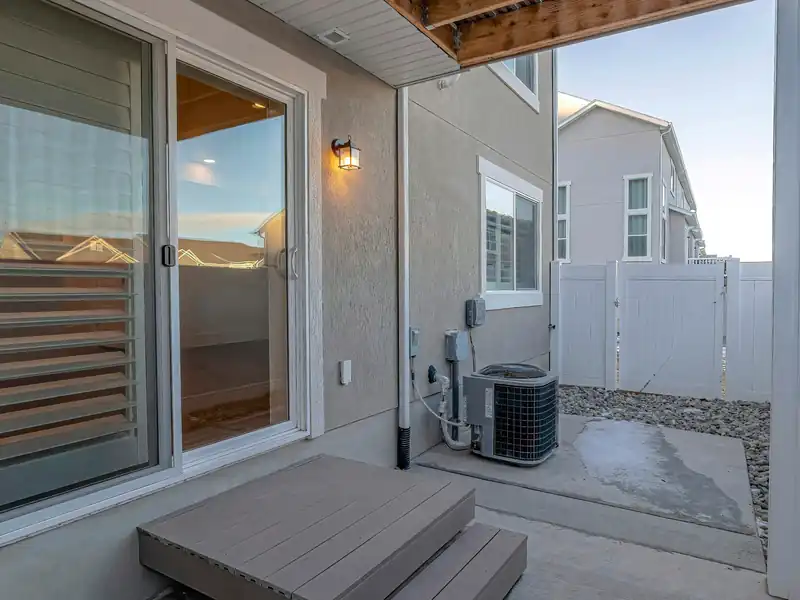
A sliding patio door gives you a wall of glass and a path to the deck without a door swinging into the room. One panel slides on a track and the other stays fixed. On ranches, split-levels and colonials with a back deck, it's often the door that gets used most in summer, and the one that's most worn out by the time we see it. It also lets in a lot of daylight, which helps in a kitchen or family room that faces the back yard.
Old sliders tend to fail at the bottom. The rollers wear flat, the track fills with grit, and the panel starts to grind. Worse, water gets past a worn sill and sits on the subfloor, which shows up as a soft spot or stains on the ceiling below. Fogged glass, a lock that won't catch and a cold draft along the meeting stile are common too. On a second-floor deck, that water can end up in the ceiling of the room below.
When we replace your slider, we remove the old door and check the subfloor and rim joist under the sill, photographing any rot before it's covered. We set a sloped sill pan, flash the opening so water goes back out and tie it into the house wrap. The new unit goes in level and square per the manufacturer instructions, then gets trimmed in white aluminum. We adjust the rollers and lock before we leave, clean up every day and haul the old unit away.
What's included
- Removal of your old slider and frame
- Inspection and photos of subfloor and rim
- Sloped sill pan set under the threshold
- Flashing tape tied into the house wrap
- Unit set level, square, shimmed and fastened
- Gap insulated with low-expansion foam
- Exterior trim wrapped in white aluminum
- Rollers and lock adjusted, daily cleanup
Signs it's time
- The panel grinds or jumps off the track
- The floor near the door is soft or stained
- Fog shows up between the panes of glass
- Cold air leaks where the two panels meet
- The latch won't catch without lifting the panel
How sliding patio doors work and seal
A sliding patio door has two or more glass panels in one frame. The operating panel rides on rollers in a bottom track, and the fixed panel is locked in place. Weatherstripping runs along the edges and the interlock where the panels meet. If the frame isn't level, the panel drags and the seal opens up, so the setting is the most important part of the job. We check level along the full sill before we fasten anything.
The sill is the wettest part of the door. Rain hits the glass and runs straight down to it. A sloped sill pan under the threshold catches any water that gets past and sends it back outside. Keep the track clean with a vacuum, and the rollers will last longer. Many new units let you adjust roller height with a screwdriver. Weep holes in the frame let water drain out, so keep them clear of dirt and leaves.
Glass is a big part of the door, so double pane with low-E and argon is common, with triple pane as an option. Tempered safety glass is standard in doors. Frames come in vinyl, fiberglass, wood or composite. A slider fits well where a swinging door would hit furniture. If you want the look of a hinged door, a French door is the other option. Popular lines include Andersen, Pella, Marvin, Harvey and Milgard. Tell us which one you want and we price and install that exact unit.
What happens behind your sliding patio doors
You won't see most of this once the job is done. That's why we photograph it before we cover it.
- Substrate inspected and photographed before it's covered
- Every opening flashed so water gets directed back out
- Seams and laps of the weather barrier taped and sealed
- Fastening and clearances per the manufacturer's manual
- Soffit ventilation kept open, corners and returns sealed
- Site cleared and magnet swept at the end of every day