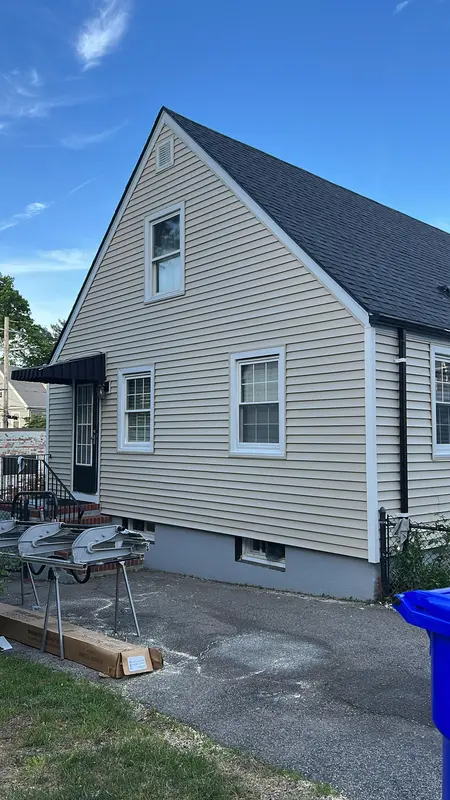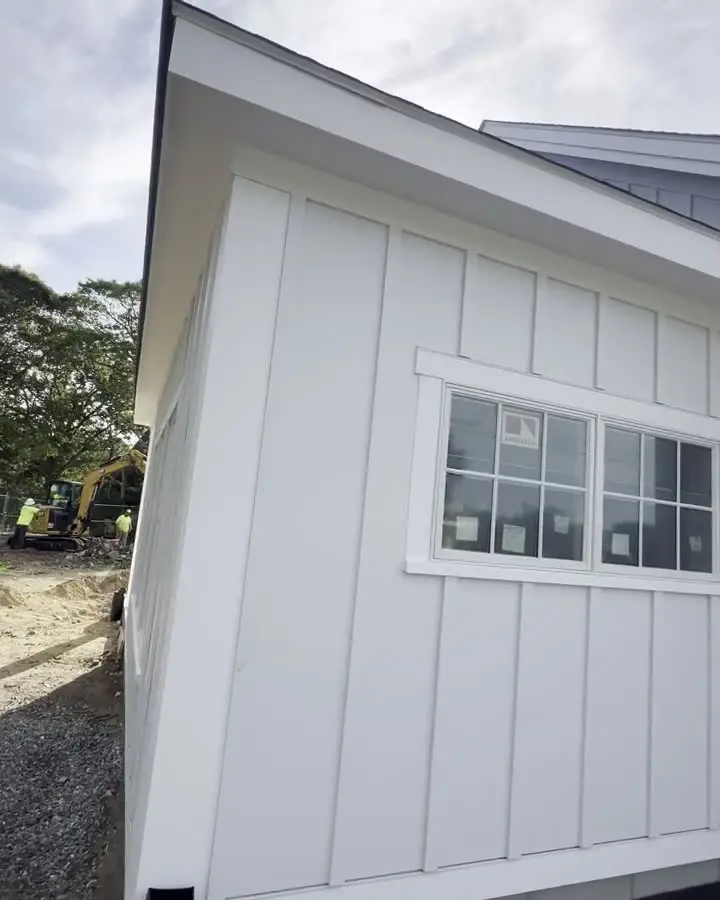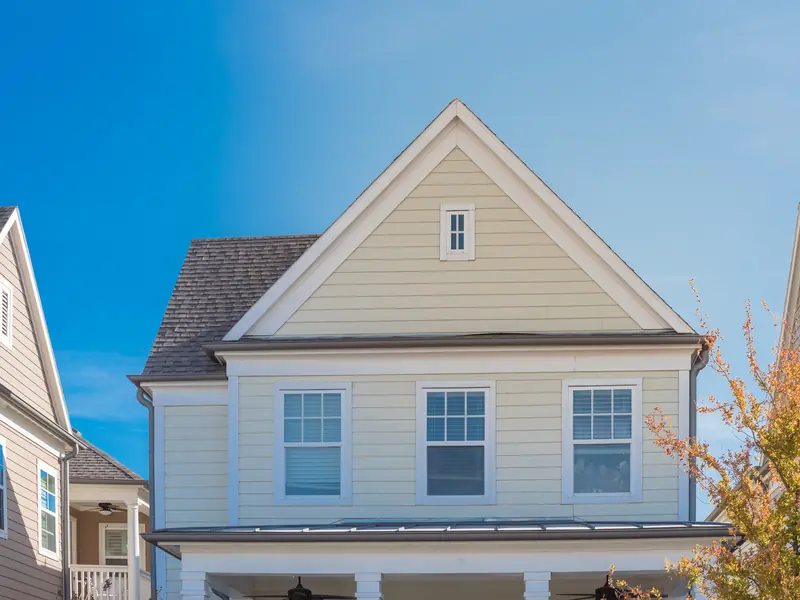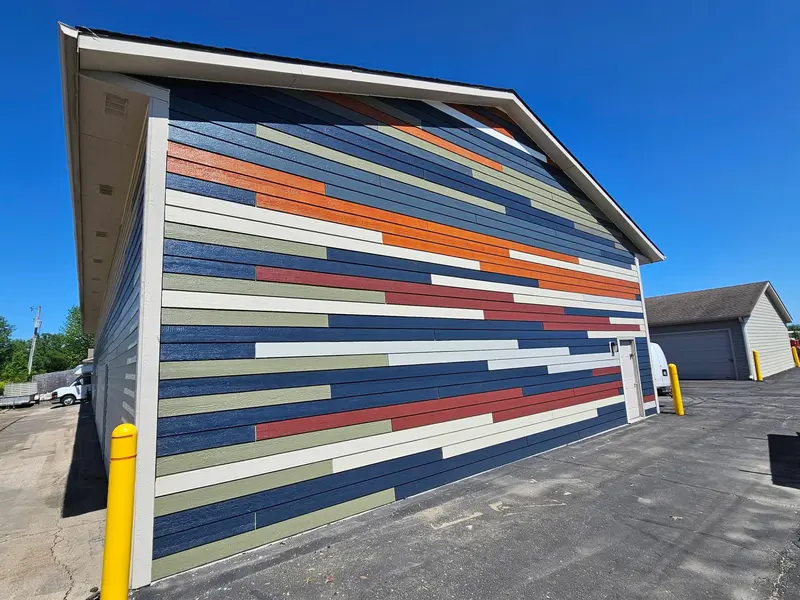

Shingles are about as New England as siding gets. Drive through any older Massachusetts town and you'll see cedar shingles on capes, cottages and shingle-style homes. Real cedar looks great but needs stain or paint, splits as it ages, and can grow moss on the shady side. Shake and shingle siding gives you that same texture in materials that hold up with far less upkeep. Vinyl and fiber cement shakes don't split, and they don't hold moisture the way cedar does on a north wall that never sees much sun.
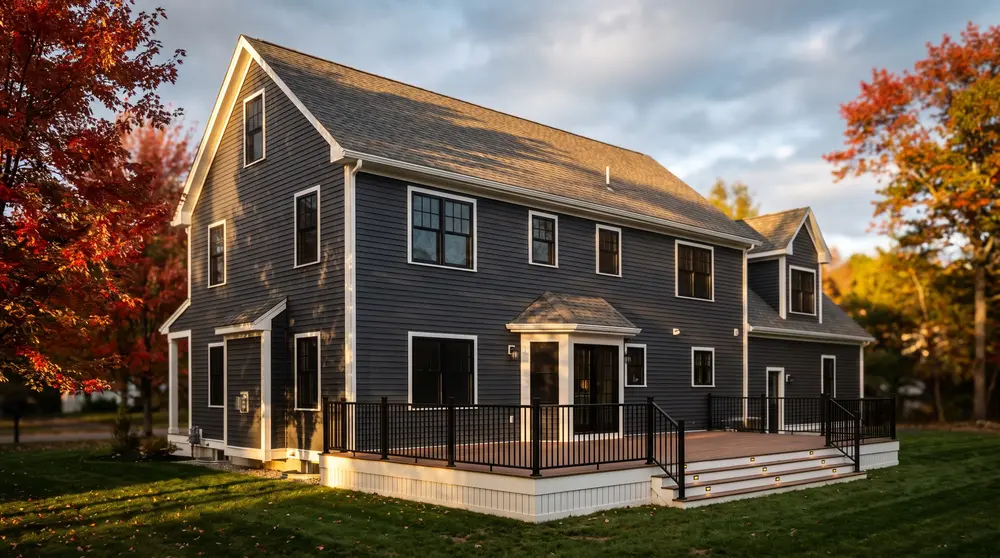
We install two kinds. Vinyl shake panels come molded with the grain and staggered edges of real shingles, in long panels that go up fast and never need paint. James Hardie fiber cement shingles give you a heavier, painted-wood look with crisp edges and no rot. Both can cover a whole house, or sit on a gable, dormer or upper story above lap siding for contrast. A shake gable over a lap body is one of the most requested combinations we see in Central Massachusetts.
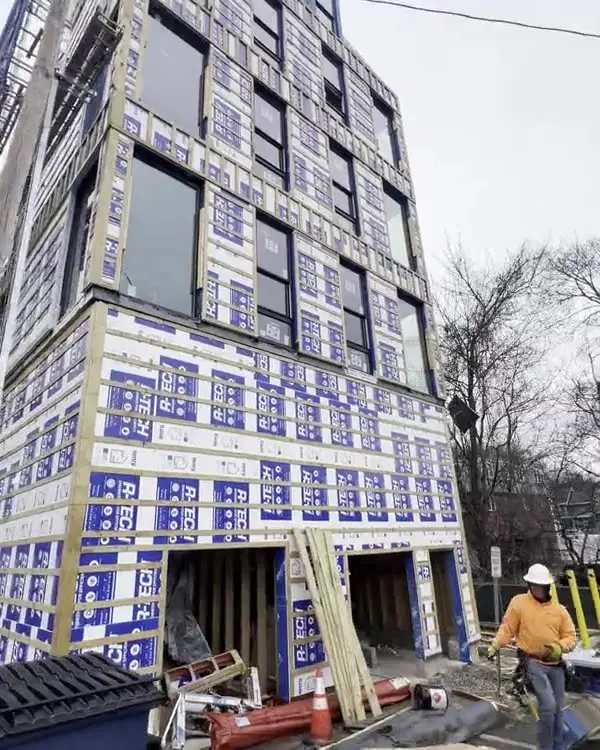
Every shake job starts with the same prep as our other siding work. We tear off your old siding, inspect and photograph the sheathing, replace rotten boards, and wrap the walls in DuPont Tyvek HomeWrap with taped seams. Every window and door gets flashed. Then we set the courses level and keep the joints staggered, so the wall reads as individual shingles and not as repeating panels. On gables we cut every course to the roof pitch and flash the joint where the shakes meet the lap siding below.
What's included
- Full tear-off of existing siding
- Sheathing inspected and photographed
- Rotten sheathing replaced
- Tyvek HomeWrap with taped seams
- Flashing at every window and door
- Vinyl shake or James Hardie shingles
- Staggered joints for a natural pattern
- Daily cleanup and magnet sweep
Signs it's time
- Cedar shingles split, curled or missing
- Moss or black staining on the shady side
- Stain or paint you redo every few years
- Gables that look flat over lap siding
- Loose shingles after a nor'easter
Shake, shingle and how they're hung
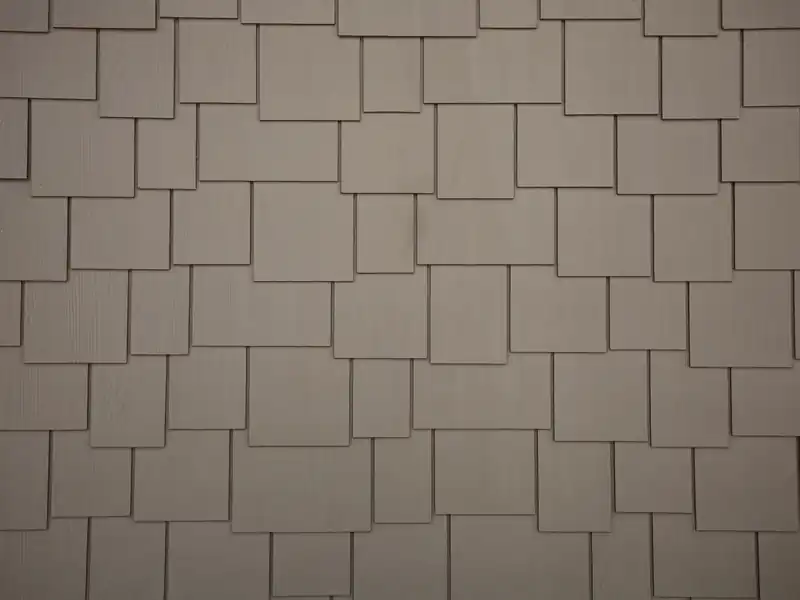
People use the words shake and shingle loosely. A traditional shake is split and rough, with a thicker butt. A shingle is sawn and more even. In vinyl and fiber cement you'll see straight-edge shingles, staggered-edge shingles, rough split shakes, and decorative shapes like half rounds or scallops for gables. The exposure, or how much of each course shows, is usually around 7 inches. A shorter exposure looks busier and more traditional, while a longer one reads cleaner on a big wall.
Vinyl shake comes in panels a few feet long that lock into the course below and nail through slots at the top. Like all vinyl, it moves with heat, so nails stay loose and panels get room at every channel. Fiber cement shingles come as panels or single pieces nailed to the wall, and they barely move with temperature. Fiber cement shingles are heavier, so they get nailed into solid framing, and every cut end gets sealed before it goes on the wall.
On a gable, shakes usually sit above a frieze board or a band of trim that separates them from the lap siding below. That joint gets flashed so water running down the shingles drains out over the lap. At the rakes, we cut each course cleanly to the roof angle so the edge stays tight and neat. Popular shake lines include CertainTeed Cedar Impressions and Mastic Cedar Discovery in vinyl, James Hardie HardieShingle and Allura in fiber cement, and LP SmartSide in engineered wood. Tell us which one you want and we price that exact product.
What happens behind your shake and shingle siding
You won't see most of this once the job is done. That's why we photograph it before we cover it.
- Substrate inspected and photographed before it's covered
- Every opening flashed so water gets directed back out
- Seams and laps of the weather barrier taped and sealed
- Fastening and clearances per the manufacturer's manual
- Soffit ventilation kept open, corners and returns sealed
- Site cleared and magnet swept at the end of every day