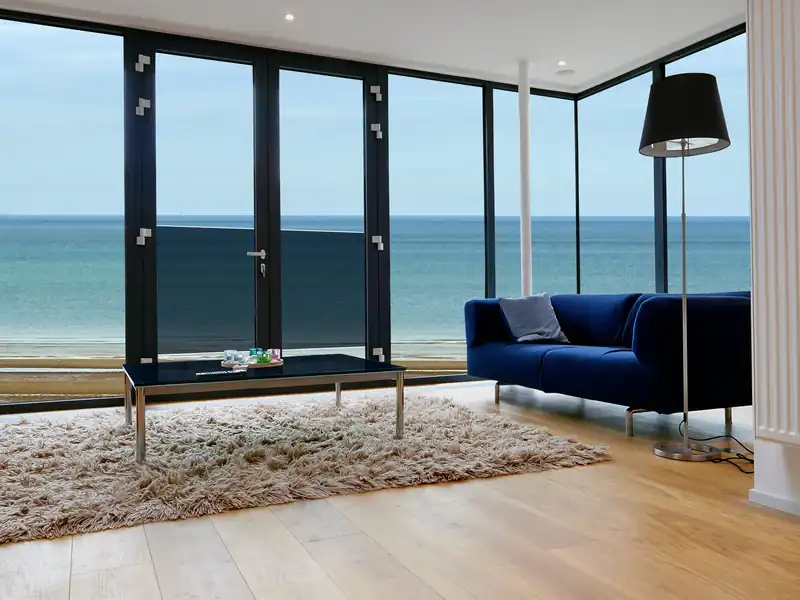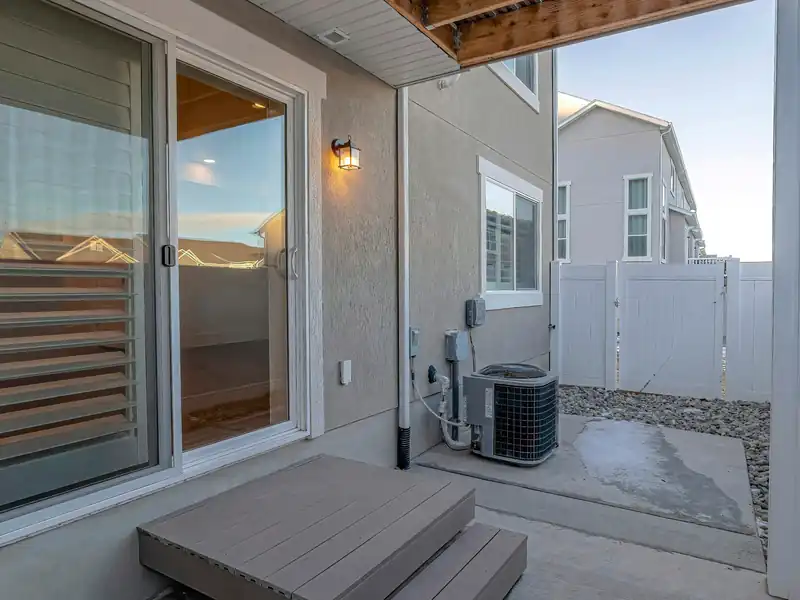


A sliding window works like a double-hung turned on its side. One sash glides left or right along a track, and the other stays fixed or slides the opposite way. There are no cranks or balances to wear out, so there's less to break. Sliders fit openings that are wider than they are tall, which you see a lot on ranches, split-levels and finished basements around Central MA. They also cost less to maintain over time, since the only thing that really wears is the track.
Homeowners often pick sliders where reaching up is hard. Over a kitchen counter or behind a bed, it's easier to push a sash sideways than to lift it. The wide glass also gives you a clean, open view without a rail across the middle. On a basement wall, a slider can be the right shape for the space between the foundation and the sill plate. In a small room, a slider also won't swing into your space the way a casement can.
When we replace your sliders, the old unit comes out and we check the rough opening for rot or wet sheathing, photographing what we find. We set a sill pan, flash the opening, tie the tape into the house wrap and set the window level so the sash rolls smoothly. Outside, the trim gets wrapped in white aluminum and sealed at the edges. We test the sash and the lock before we leave, clean up every day and haul off the old units. Your written quote lists every opening line by line.
What's included
- Removal of your old slider or window
- Inspection and photos of the rough opening
- Sill pan set and sloped to drain
- Flashing tape lapped into the house wrap
- Window set level so the sash rolls true
- Gap insulated with low-expansion foam
- Exterior trim wrapped in white aluminum
- Sealant, sash test and daily cleanup
Signs it's time
- The sash drags or jumps off the track
- Dirt and water collect in the bottom track
- Cold air leaks where the sashes meet
- The lock won't line up without a shove
- Glass is fogged between the panes
How sliders work and where they fit
A slider rolls on small wheels or glides on a smooth track in the bottom of the frame. Weatherstripping runs along the edges and where the two sashes overlap. Because the frame has to be level for the sash to roll true, the install matters. A frame set even a little out of level will drag, and the lock will stop lining up over time. That's why we check level at the sill and the head before fastening.
For ventilation, a slider opens about half its width. Many models let you lift the sliding sash out of the track to clean both sides of the glass from inside. Bottom tracks collect grit, so a quick vacuum each season keeps them smooth. In a bedroom, a wide slider can meet egress, but we confirm the clear opening at the estimate. Weep holes in the bottom of the frame let water drain out, so keep them clear.
Glass choices match other styles. Double pane with low-E and argon is common, with triple pane as an option for cold rooms. Frames come in vinyl, fiberglass, wood or composite, and vinyl is the usual pick for sliders because the track stays smooth. Sliders look most at home on ranches and split-levels, and less so on the front of a traditional colonial. Popular lines include Andersen, Pella, Milgard, Simonton and Harvey. Tell us which one you want and we price and install that exact unit.
What happens behind your sliding windows
You won't see most of this once the job is done. That's why we photograph it before we cover it.
- Substrate inspected and photographed before it's covered
- Every opening flashed so water gets directed back out
- Seams and laps of the weather barrier taped and sealed
- Fastening and clearances per the manufacturer's manual
- Soffit ventilation kept open, corners and returns sealed
- Site cleared and magnet swept at the end of every day